
Quality managers in medical device companies spend a large part of their day chasing status information that lives in different places. Open CAPAs in one folder, overdue training records in another, pending document approvals in a third. When everything is siloed, preparing for an ISO 13485:2016 management review becomes a manual compilation exercise rather than a read-out of current system performance.
A QMS dashboard changes that relationship. Rather than gathering data from scattered sources before each review cycle, a quality manager sees the current state in one place: open CAPAs by age and owner, audit findings by status, change requests in progress, supplier qualification due dates, training completion rates by role and department, and document approvals waiting on a signature.
ISO 13485:2016 Clause 5.6 requires management to review the QMS at planned intervals, using input that includes audit results, process performance data, corrective and preventive action status, and feedback from customers and suppliers. A dashboard does not replace the review: it makes the required inputs immediately available without a pre-meeting data-gathering effort.
Role separation matters. A QA manager, a regulatory affairs lead, and a production team supervisor each need a different slice of the same data. Views scoped to individual responsibilities make the daily check a useful habit rather than a source of overwhelm.
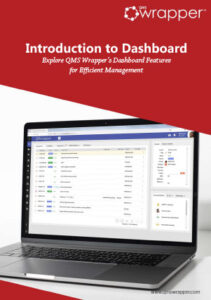
The whitepaper below shows how qmsWrapper’s dashboard is structured for medical device quality teams.