
Approval workflows in QMS are one of the most overlooked areas of a Quality Management System.
On paper, the process often appears simple:
A document is reviewed.
Someone approves it.
The document is released.
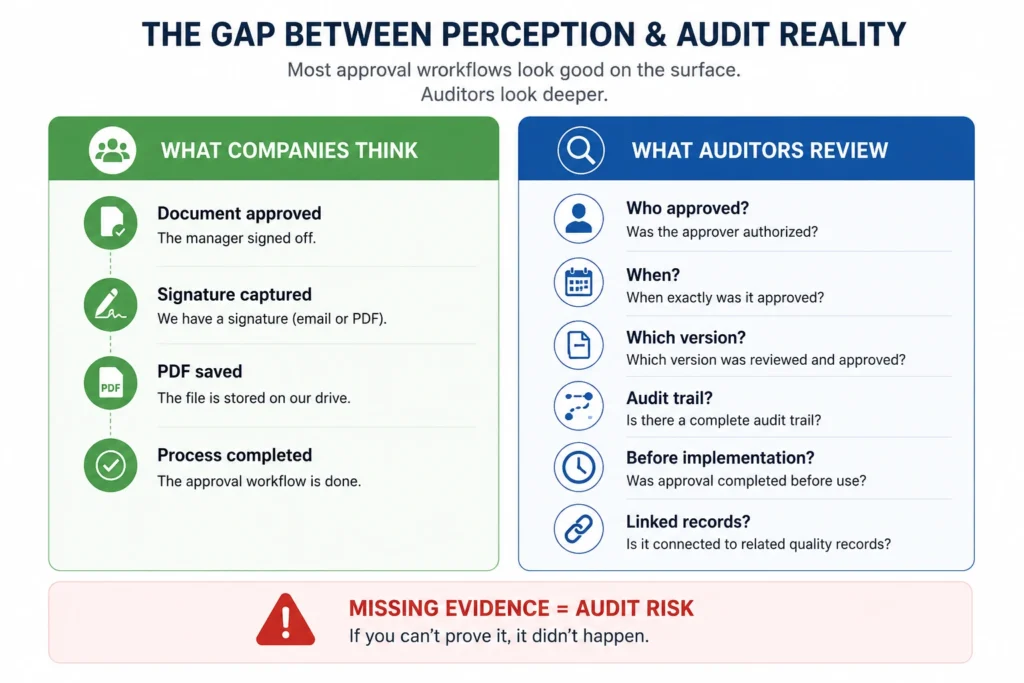
The problem is that auditors rarely stop at the signature.
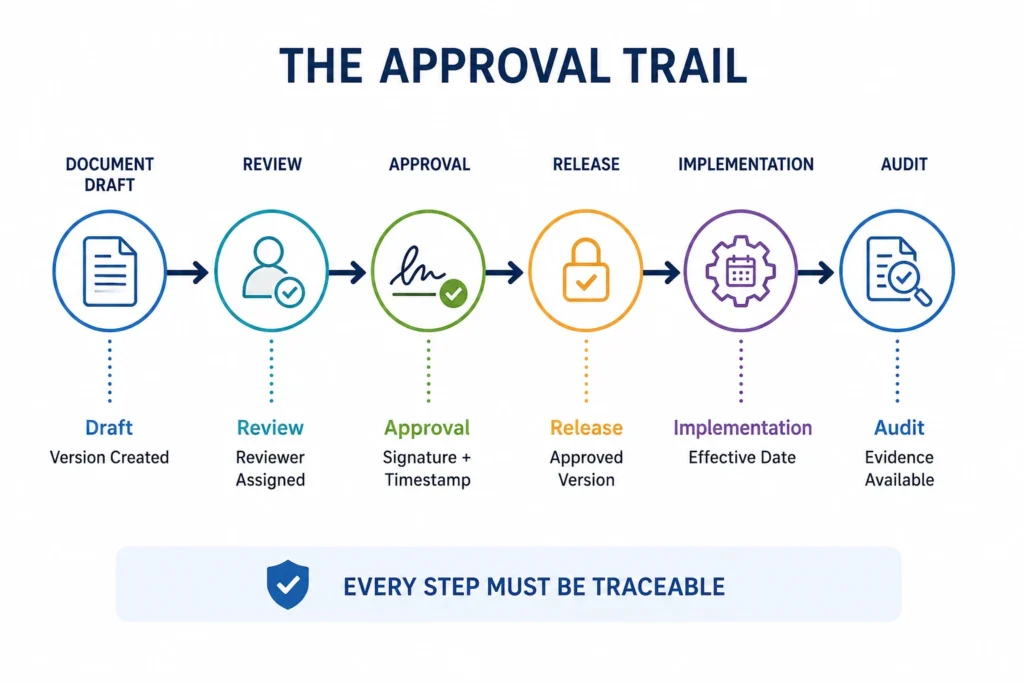
They follow the trail.
They want to know:
- Who approved the document?
- When was it approved?
- Which version was approved?
- Was approval completed before implementation?
- Can the approval be connected to related quality records?
If those questions cannot be answered quickly, approval workflows can become a source of audit findings.
This article explains what ISO 13485 approval workflows should include, common approval workflow audit findings, and how medical device companies can improve approval traceability.
Why Approval Workflows in QMS Matter
ISO 13485 requires organizations to ensure that documents are reviewed and approved before issue.
The requirement sounds straightforward.
The challenge appears when companies attempt to manage approvals through email chains, spreadsheets, shared folders, or paper-based processes.
In many organizations, approval evidence becomes scattered across:
- Emails
- PDF attachments
- Shared drives
- Printed signatures
- Meeting notes
Months later, when an auditor asks for approval evidence, locating the complete approval history becomes difficult.
Approval workflows exist to eliminate this problem.
A controlled approval workflow ensures that reviews, approvals, and document releases occur consistently and can be demonstrated at any time.
What Should an ISO 13485 Approval Workflow Include?
A compliant approval workflow typically includes several core elements.
Defined Roles and Responsibilities
The workflow should clearly identify who reviews, who approves, and who is responsible for document release.
Approval authority should not depend on memory or informal agreements.
Controlled Approval Routing
The system should ensure documents reach the correct approvers in the correct sequence.
Some approvals require a specific order.
Others require multiple stakeholders to approve simultaneously.
The workflow should enforce these requirements automatically.
Version Control
Approvers must know exactly which version they are reviewing.
Organizations should be able to demonstrate which version was approved and prevent obsolete versions from being used accidentally.
Electronic Signatures
Electronic signatures provide traceable evidence of approval activity.
A compliant system records:
- Who approved
- When approval occurred
- Which document version was approved
Audit Trails
Every approval action should be recorded.
Organizations should be able to retrieve the complete approval history without relying on email searches or manual reconstruction.
Approval Before Release
Documents should not become effective until required approvals are complete.
This sounds obvious, but auditors frequently encounter situations where implementation occurred before formal approval was finalized.
Common Approval Workflow Audit Findings
Many approval workflows appear compliant until auditors begin following the approval trail.
Common findings include:
Missing Approval History
Organizations cannot demonstrate who approved a document or when approval occurred.
Missing Timestamps
Approvals exist, but the approval date cannot be verified.
Approval After Implementation
Documents were already in use before formal approval was completed.
Email-Based Approvals
Approval evidence is scattered across inboxes and cannot be reconstructed efficiently.
Missing Version References
The organization cannot demonstrate which version was approved.
Incomplete Audit Trails
Approval actions exist, but supporting records are missing.
No Connection to Related Quality Records
Approvals cannot be linked to:
- CAPAs
- Changes
- Risks
- Training records
- Technical documentation
As quality systems become more connected, these relationships become increasingly important.
Free Download: ISO 13485 Approval Workflow Checklist
Not sure whether your approval process contains these gaps?
Download the ISO 13485 Approval Workflow Checklist and evaluate:
✓ Approval traceability
✓ Electronic signatures
✓ Version control
✓ Approval routing
✓ Audit trail completeness
✓ Approval readiness for ISO 13485 and FDA audits
Sequential vs Parallel Approval Workflows
Approval workflows are not always identical.
Most organizations use one of two approaches.
Sequential Approval Workflows
Approvals occur in a predefined order.
For example:
Quality Manager → Regulatory Manager → CEO
Each approval must be completed before the next approver receives the document.
This approach is commonly used when approval authority follows organizational hierarchy.
Parallel Approval Workflows
Multiple approvers receive the document simultaneously.
The workflow is completed only after all required approvals are received.
This approach is often used when several departments must review the same document.
Examples include:
- Quality
- Regulatory
- Engineering
- Manufacturing
Many organizations use a combination of both approaches depending on the process.
Why Manual Approval Processes Create Risk
Manual approval management often creates hidden compliance risks.
Managers spend time:
- Chasing signatures
- Sending reminder emails
- Tracking approval status manually
- Searching for approval records
- Verifying document versions
As document volume grows, these activities become difficult to maintain consistently.
The result is usually one of two outcomes:
Either approvals become delayed,
or approvals become superficial.
Neither outcome improves compliance.
Improving Approval Traceability
The goal of an approval workflow is not simply obtaining signatures.
The goal is creating defensible evidence.
A well-designed approval workflow should allow organizations to answer the following questions within minutes:
- Who approved this document?
- When was it approved?
- Which version was approved?
- Was approval completed before release?
- What changed?
- Which related quality records are affected?
If these questions require manual investigation, the workflow may need improvement.
How qmsWrapper Supports Approval Workflows
qmsWrapper helps medical device companies manage approval workflows through controlled, traceable processes.
Organizations can define:
- Sequential approval workflows
- Parallel approval workflows
- Required approvers
- Approval routing rules
- Electronic signatures
- Approval notifications
Every approval action is recorded with a complete audit trail.
Documents remain controlled throughout the approval process, version history is maintained automatically, and approval records remain available for future audits.
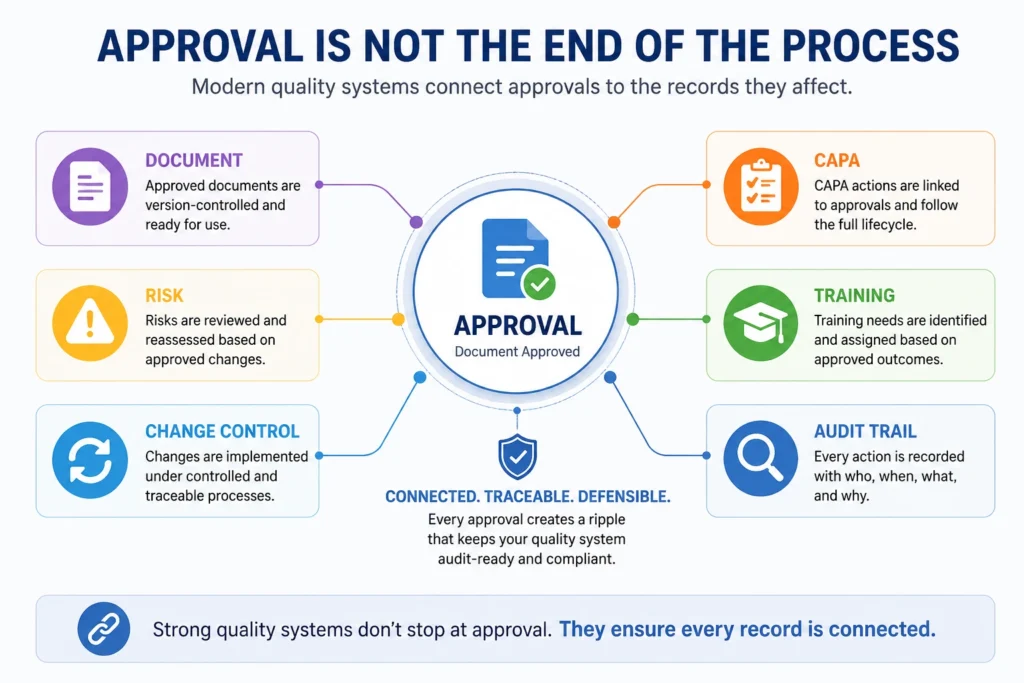
Approvals can also remain connected to related quality records such as:
- CAPAs
- Change Controls
- Risks
- Training records
- Controlled documents
This helps organizations maintain visibility beyond the signature itself.
Approval Workflows Are About Evidence, Not Signatures
Approval workflows often appear compliant until someone follows the trail.
The signature is only part of the story.
Auditors increasingly expect organizations to demonstrate complete approval traceability, version control, approval history, and supporting evidence.
The stronger the approval workflow, the easier it becomes to demonstrate compliance when questions arise.
Before your next audit, evaluate whether your approval process can answer those questions quickly and confidently.
Evaluate Your Approval Process
Download the ISO 13485 Approval Workflow Checklist and identify approval workflow gaps before your next audit.
Questions Quality Teams Commonly Ask About Approval Workflows
What is an approval workflow in a QMS?
An approval workflow in a QMS defines how documents, changes, quality records, and other controlled information are reviewed, approved, released, and maintained. The workflow establishes responsibilities, approval authority, traceability, and evidence needed to support compliance.
What do ISO 13485 auditors look for in approval records?
Auditors typically verify who approved a document, when it was approved, which version was approved, and whether approval occurred before implementation. They may also review audit trails, approval routing, and connections to related quality records.
Are electronic signatures required for ISO 13485 compliance?
ISO 13485 does not specifically require electronic signatures. However, when organizations use electronic systems, signatures should provide traceability, user accountability, and evidence that approvals were completed by authorized personnel.
What is the difference between sequential and parallel approval workflows?
Sequential approval workflows require approvals to occur in a predefined order. Parallel approval workflows allow multiple reviewers or approvers to evaluate the same record simultaneously. Many organizations use a combination of both approaches depending on the process.
What are the most common approval workflow audit findings?
Common findings include missing approval history, incomplete audit trails, missing timestamps, approval after implementation, lack of version control, and inability to demonstrate approval traceability during an audit.
How can approval workflows improve traceability?
Approval workflows create a documented record of review and approval activities. When connected to related documents, risks, CAPAs, changes, and training records, they help organizations maintain visibility and demonstrate compliance more efficiently.